
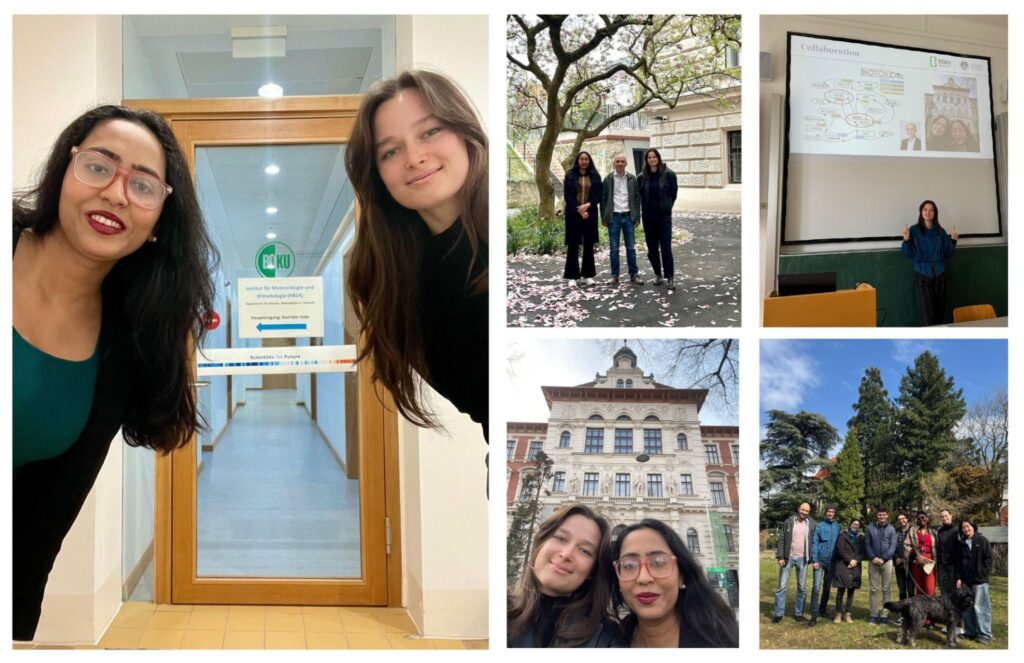
During three months, Darina Balková, PhD candidate at Università Cattolica del Sacro Cuore, was hosted by BOKU University. Under the guidance of Univ.Prof. Dr. Harald Rieder, she worked at the Institute of Meteorology and Climatology alongside Richa Raj, PhD candidate, to integrate large-scale climate datasets into predictive models for mycotoxin contamination. During her stay, she also presented her research at an internal seminar, contributing to ongoing dialogue between meteorologists and agricultural scientists.
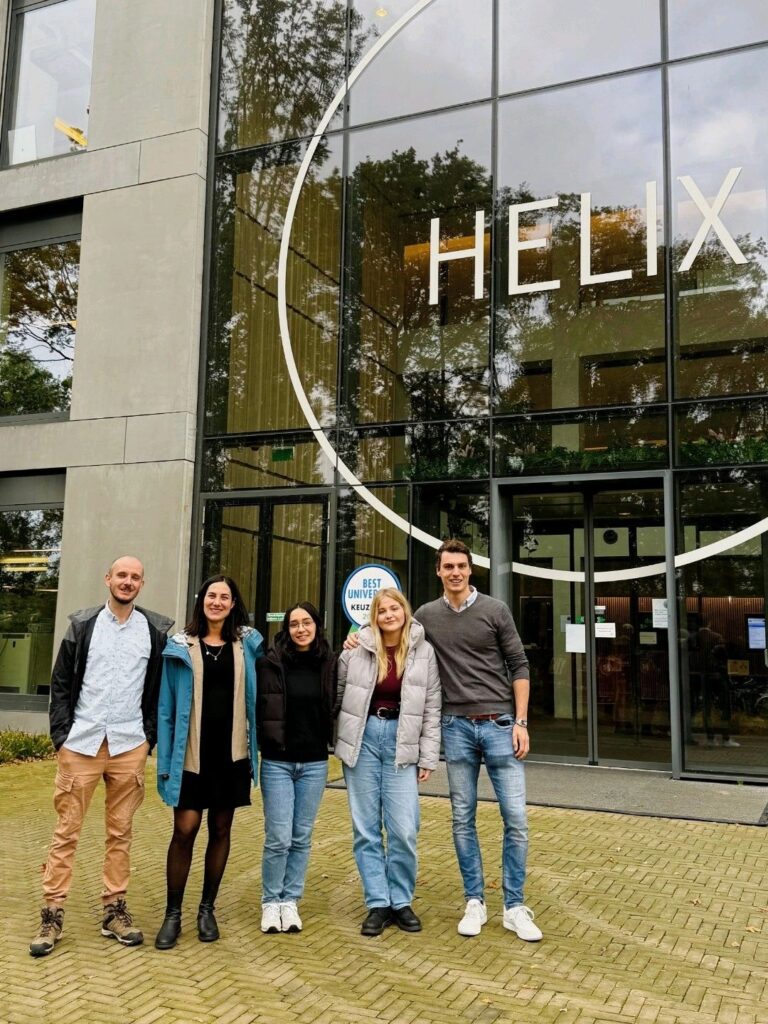
Maryam Dehbasteh, our PhD candidate at Queen’s University Belfast (QUB) supervised by Dr. Cuong Cao, was hosted at Wageningen University & Research (WUR). During her stay, she worked under supervision of Dr. Gert Salentijn and the guidance of Ids Lemmink. This collaboration integrated paper-based liquid-liquid extraction with surface-enhanced Raman spectroscopy (SERS) for the detection of tropane alkaloids in food.
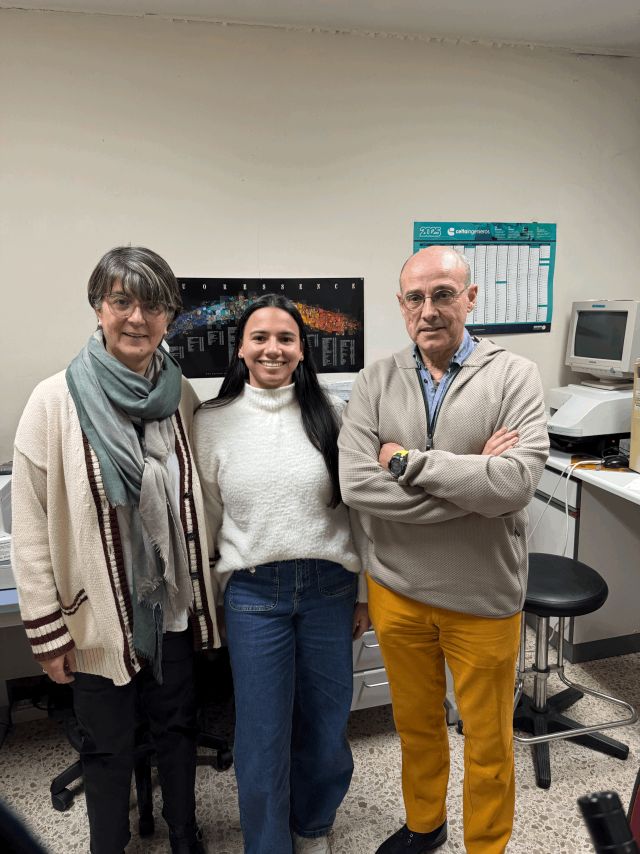
During one month, Maria Paula Gómez Román, PhD candidate at CIIMAR, completed her secondment at Universidade de Santiago de Compostela. During this stay, she worked with the FARMATOX research group under the guidance of Prof. Luis M. Botana and Prof. Amparo Alfonso, receiving hands-on training in advanced laboratory techniques, including confocal microscopy, Surface Plasmon Resonance (SPR)-based biosensors, flow cytometry and the evaluation of bioactivity potential and mechanism of action of natural compounds.
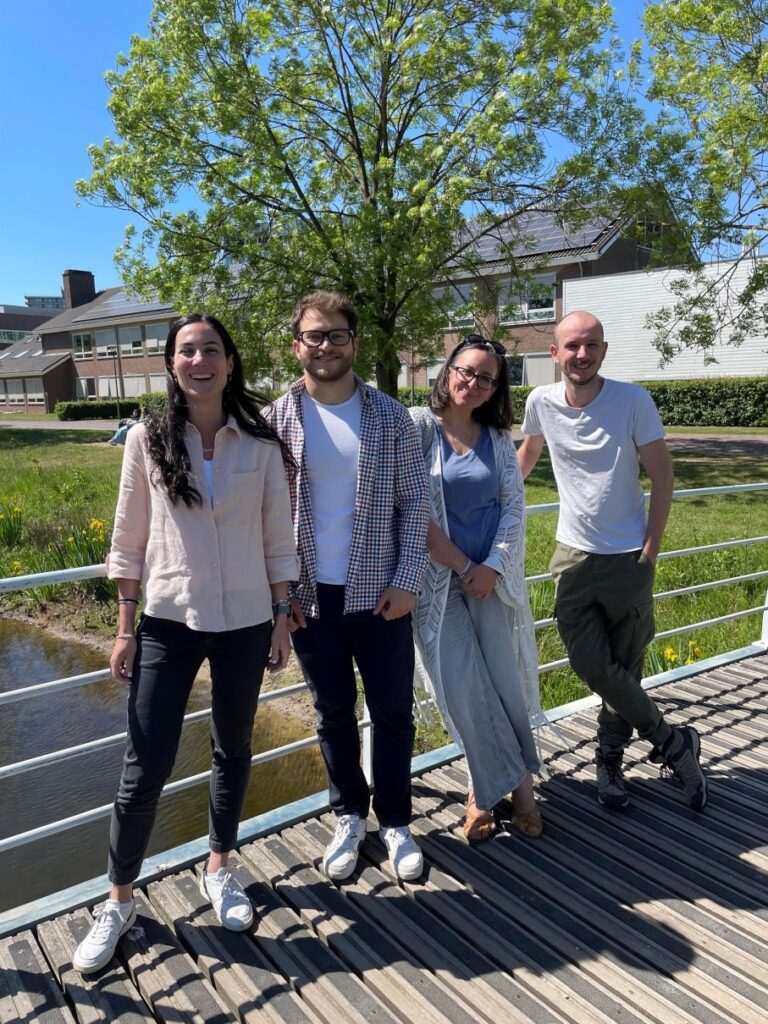
During three months, Alessandro Volkov, PhD candidate at the University of Chemistry and Technology of Prague, was hosted by Wageningen University & Research (WUR). Under the supervision of Dr. Laura Righetti and Dr. Gert Salentijn, he worked on the targeted quantification of ergot alkaloids in rye grain using LC–MS/MS and complemented this with HRMS screening to support the annotation of additional ergot alkaloids. During the stay, he also shared his research and preliminary results with the hosting Natural Toxins team, strengthening collaboration and knowledge exchange between partner laboratories.
During a two-month secondment, Richa Raj, PhD candidate at the Institute of Meteorology and Climatology, BOKU University (Vienna), was hosted by Università Cattolica del Sacro Cuore (UCSC) under the supervision of Prof. Paola Battilani and Dr. M. C. Leggieri. She worked alongside PhD candidate Darina Balková and integrated large-scale climate reanalysis datasets (ERA5) with mechanistic fungal risk models. Her work resulted in the application of daily mycotoxin risk indices for key species (Aspergillus flavus, Fusarium graminearum, Fusarium verticillioides) at the continental scale, leading to the production of suitability maps for these fungi and the identification of emerging agricultural risk hotspots through the integration of climate and crop distribution data.