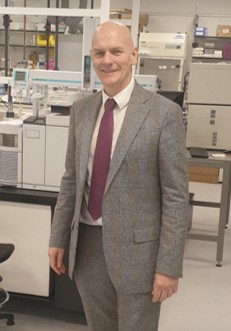

Prof. Dan Bebber, DPhil
Dan is Professor of Ecology at the University of Exeter. His research focuses on plant pathogen epidemiology, fungal ecology, food security and species distributions. He is interested in the impacts of climate change and other abiotic and biotic threats on crop production, with a strong focus on tropical crops such as coffee and banana.
Dan obtained his PhD in Tropical Ecology at the University of Oxford, where he studied the effects of El Niño-related drought and insect herbivory on tree regeneration in Sabah, Malaysia. He subsequently held research positions at the University of Toronto and the University of Oxford, before joining Earthwatch in Oxford as Head of Climate Change Research, where he managed an international citizen science programme on forest carbon dynamics.
Since joining the University of Exeter in 2013, Dan has developed an internationally recognised research profile in the study of crop pests and pathogens and their implications for global food systems. He works closely with international partners, including CABI, on pest and pathogen impacts, and has contributed to a range of strategic initiatives in sustainable agriculture and food security. He also currently serves as Co-Director of Global Engagement at the University of Exeter.
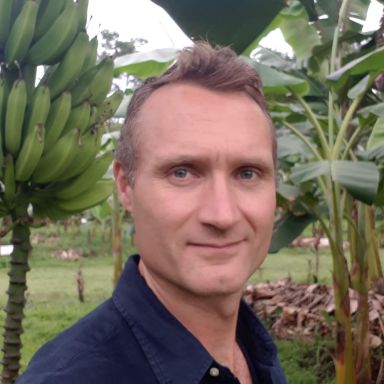
Dr. Thomas Glauner
Thomas is Director of Product Management for Liquid Chromatography at Agilent Technologies. He has extensive expertise in analytical chemistry, liquid chromatography and LC/MS, and has held a wide range of scientific, application, marketing and product management roles during his career at Agilent.
Thomas studied Geoecology at the Karlsruhe Institute of Technology and later completed his PhD in Chemical Engineering at the same institution. Before joining Agilent Technologies, he worked as a research assistant in water chemistry at the Engler-Bunte-Institut, Karlsruhe Institute of Technology.
Over nearly two decades at Agilent, Thomas has contributed to the development, application and strategic management of liquid chromatography technologies. His work has supported analytical solutions relevant to food, environmental and chemical analysis, and he currently leads product management activities for liquid chromatography systems.
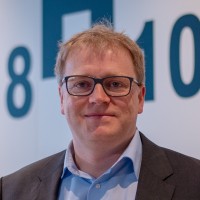
Prof. Dr. Doris Marko
Doris is Professor of Food Chemistry at the University of Vienna, where she has also served as Head of the Institute of Food Chemistry and Toxicology since 2010. Her research focuses on food chemistry and toxicology, with particular emphasis on the molecular mechanisms underlying the biological effects of food constituents and contaminants.
Doris studied Food Chemistry at the University of Kaiserslautern, where she completed her PhD with distinction and later obtained her habilitation in Food Chemistry. Following postdoctoral research in Kaiserslautern and a visiting appointment at Stanford University, she held academic positions in Germany before being appointed Full Professor for Food Toxicology at the University of Karlsruhe. Since 2009, she has been Full Professor of Food Chemistry at the University of Vienna.
Over the course of her career, Doris has developed an internationally recognised profile in the fields of food toxicology, molecular nutrition and risk assessment. In addition to her research and teaching activities, she has held several international visits, including at Griffith University, Queensland University of Technology and the University of Parma. She is an European Registered Toxicologist and has contributed to the advancement of food toxicology and food safety research through her scientific publications, conference contributions and academic leadership.
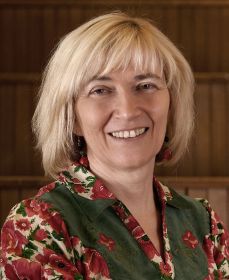
Prof. Chris Elliott, PhD, FRSC, FRSB,FRSPH, MRIA, OBE
Chris is the founder of the Institute for Global Food Security at Queen’s University Belfast. He is also Professor and co-founder of the Center of Excellence in Global Food Security, Thamassat University in Thailand.
He has published more than 600 peer review articles relating to the detection and control of agriculture, food and environmental related contaminants. Chris led the independent review of Britain’s food system following the 2013 horsemeat scandal. He now acts as a Scientific Advisor for a range of United Nations agencies, governments and industries on a range of food security topics.
Over the years Chris has developed a high level network of collaborators across Europe, the United States, the Middle East and Asia. He is a recipient of a Winston Churchill Fellowship and is an elected Fellow of the Royal Society of Chemistry, Royal Society of Biology and Royal Society for Public Health. Chris has received numerous prizes and awards for his work such as the Royal Society of Chemistry Theophilus Redwood Prize and become an Officer of the British Empire (OBE) in 2017. He was elected a member of the Royal Irish Academy in 2020 and became Honorary President of the Society of Food Hygiene and Technology in 2023.